

Introducing MZ Automation’s Joint White Paper in Collaboration with Haulogy
MZ Automation is proud to announce the publication of our joint white paper in collaboration with Haulogy: “Dynamic optimization of distribution network capacity: How Haulogy FLEX uses MZ Automation’s ICCP/TASE.2 library as a key communication enabler to leverage flexibility in medium voltage distribution networks.” This article briefly summarizes the purpose and findings of the white paper, as well as the solution’s implications for the greater energy industry.
The Problem with Today’s Electricity Distribution Networks
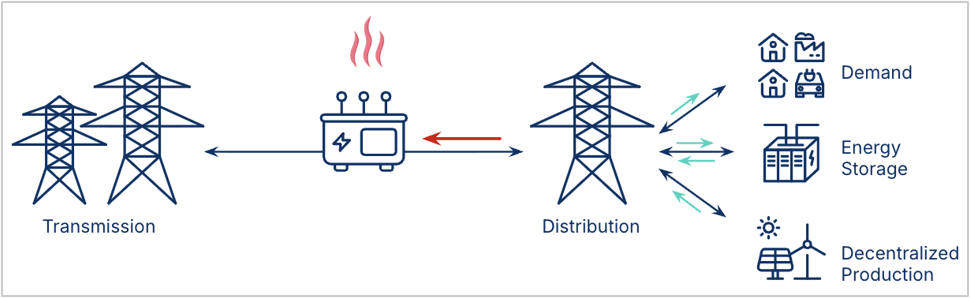
Electricity distribution networks today are facing an unprecedented challenge. The rapid adoption of distributed generation—like rooftop solar, wind, and battery storage—alongside the electrification of heating and mobility apparatuses, is pushing grid infrastructure to its physical limits far more often than ever before. Traditional grid expansion, such as adding copper lines and physical transformers, takes years of construction and massive capital expenditure, while network congestion still occurs on a daily basis. To keep up, distribution system operators must run existing networks closer to their limits by managing flexibility.
Haulogy’s Solution
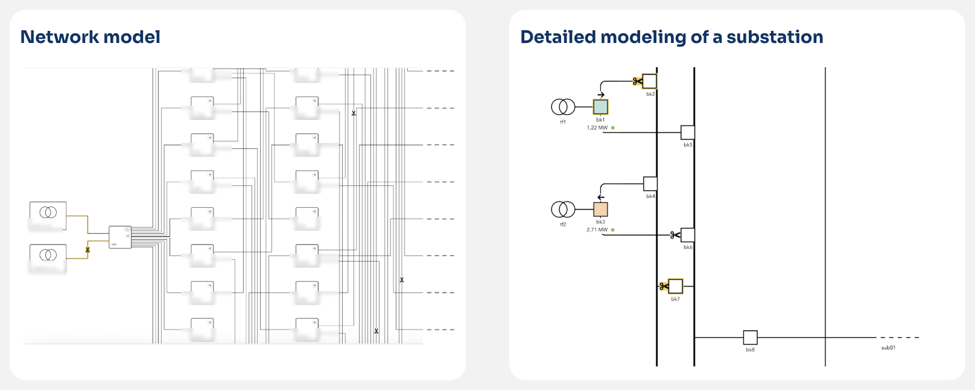
To tackle this operational shift, Haulogy, developed FLEX—a Distributed Energy Resources Management System (DERMS) tailored for distribution system operators. Haulogy builds software designed to make the energy transition operational for supplies and network operators. Haulogy FLEX transforms congestion management into an automated, controlled process by running a continuous loop over the network: First, it models the grid, acquiring real-time electrical states of the network, including its topology and measurements directly from the operator’s systems, resulting in adequate modelling of the system. The generated model is composed of transformers, substations, links, and access points.
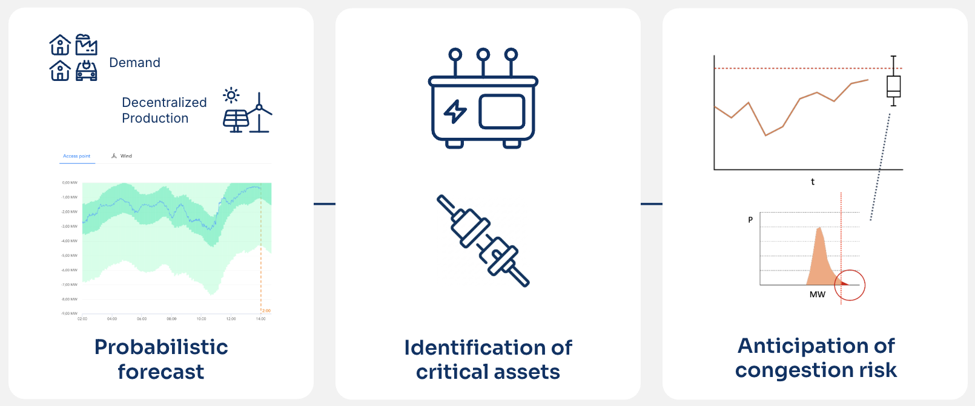
Secondly, it anticipates bottlenecks. Using probabilistic short-term forecasts, it evaluates risks on critical assets such as transformers, cables, and lines, combined with topological data from the modeling, to detect congestion points before they become critical.
And third, it acts. When congestion risks exceed configured thresholds, FLEX calculates the exact operating set points later sent to the SCADA or Supervisory Control and Data Acquisition system, which are required for flexible units to bring the network back within safe operating limits.
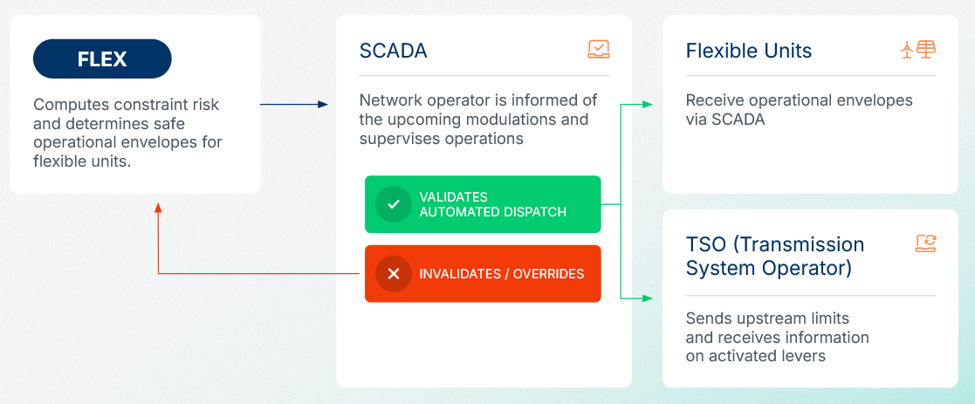
However, an intelligent flexibility management system is only as effective as its ability to communicate with the grid. To function in real time, Haulogy FLEX must constantly read telemetry from the operator’s central SCADA or ADMS (also known as the Advanced Distribution Management System), and write control set points back. But the utility landscape is highly fragmented. Operators rely on various generations of SCADA systems from different vendors, and building custom, proprietary connectors for every individual system is slow, expensive, and difficult to maintain. The ideal bridge is a standardized communication protocol that SCADA systems and ADMS already support. An example of one such protocol is ICCP/TASE.2.
MZ Automation’s ICCP/TASE.2 Communication Protocol Stack in Haulogy FLEX
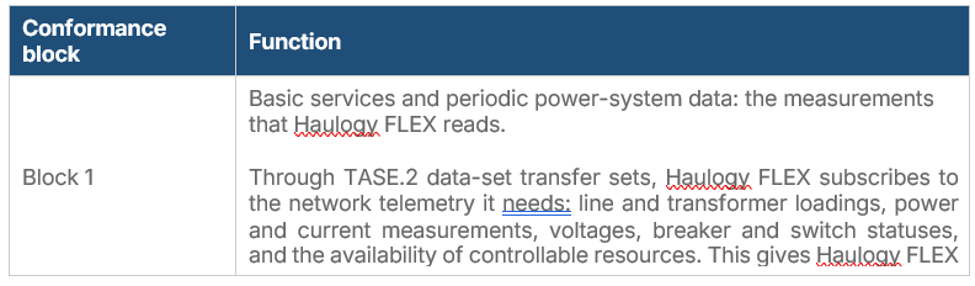
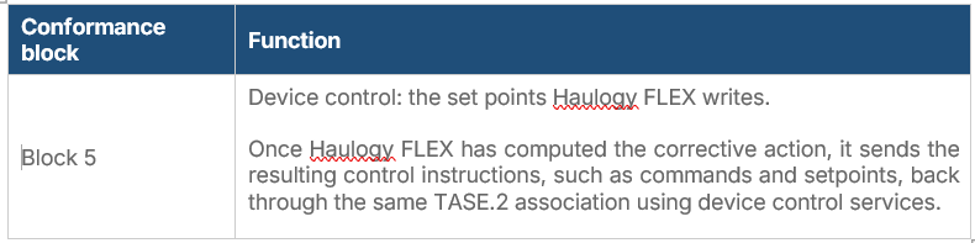
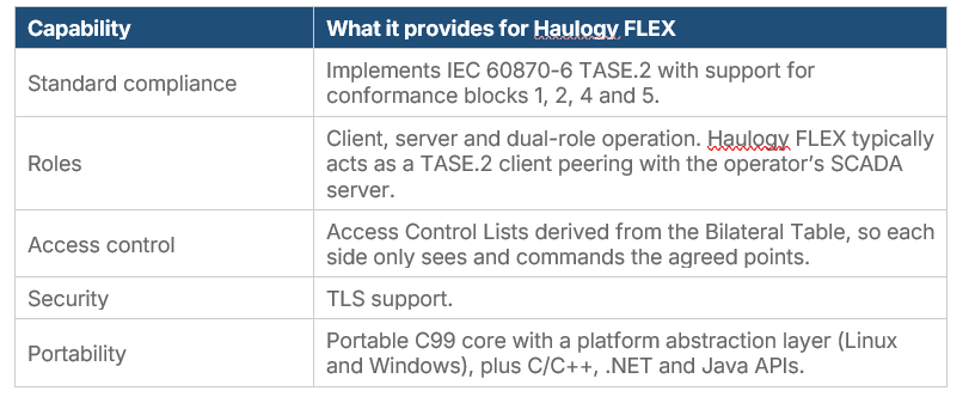
The Inter-Control Center Communications Protocol, or ICCP and formally standardized as TASE.2, is the international standard for data exchange between control centers and control-center-class systems in the industry. Instead of building a complex protocol stack from the ground up, Haulogy integrated MZ Automation’s library which enabled FLEX to speak the ICCP/TASE.2 language necessary to communicate with operators’ various SCADA systems, and utilizing key IEC60870-6 Conformance Blocks:
Using Conformance Block 1, FLEX subscribes to the power system data. It continuously reads line and transformer loadings, power and current measurements, voltages, breaker and switch statuses, and the availability of controllable resources to maintain an accurate, live view of the grid’s electrical state on which FLEX runs its anticipation and decision logic.
Then, using Conformance Block 5, FLEX issues device control commands. Once the optimization algorithm determines safe operating limits, it writes control commands and set points directly back to the SCADA for automated or operator-validated execution.
By embedding MZ Automation’s ICCP/TASE.2 communication protocol stack, Haulogy created a SCADA-agnostic congestion management solution. Instead of re-engineering communication adapters for every new deployment, Haulogy uses a single, open integration pattern deployable across heterogeneous operator environments. This turns unpredictable network congestion into a reliable, controlled process.
If you have any further questions about the white paper or how our libraries can support your business, please do not hesitate to contact us to learn more. You can also read the full white paper here.